
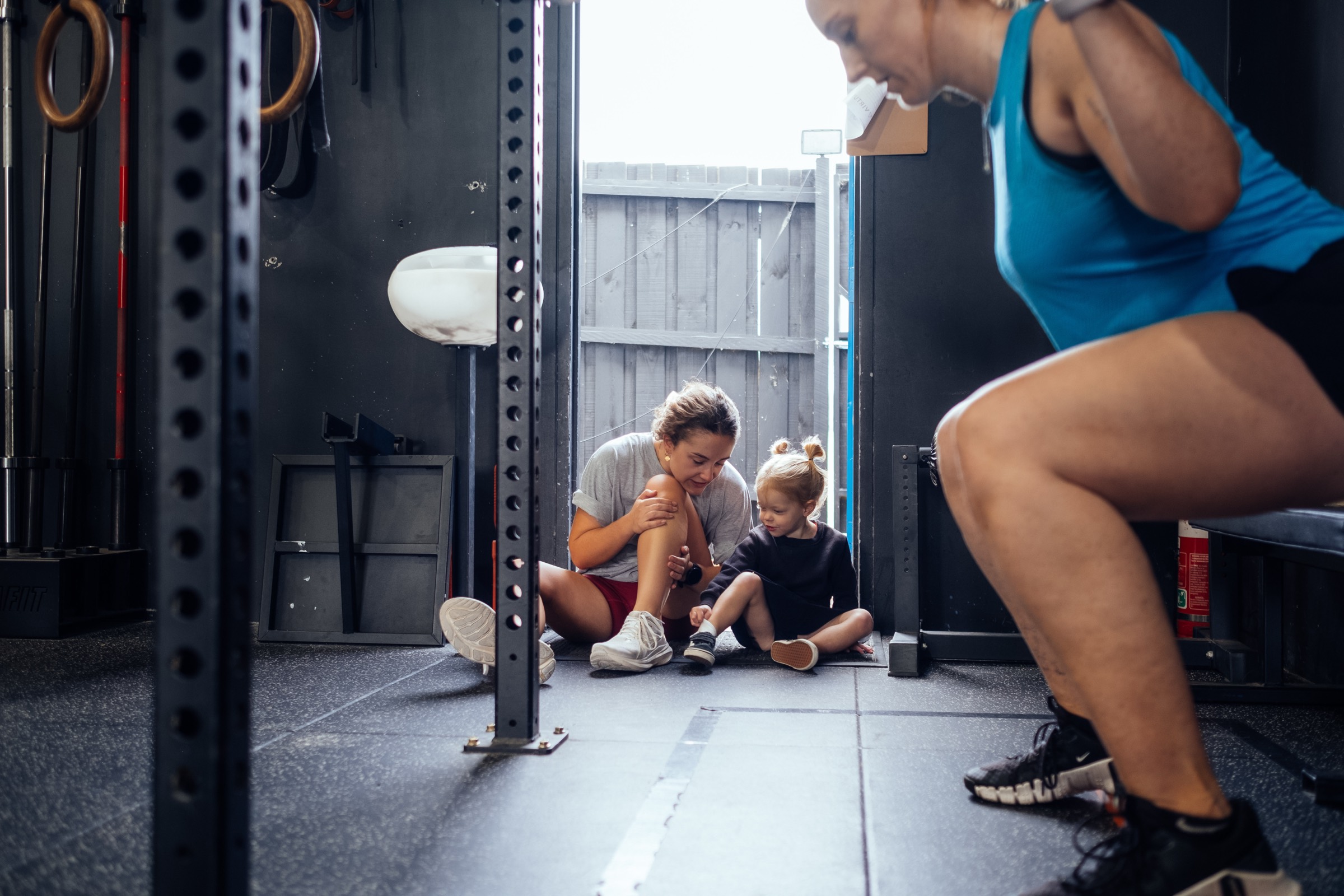
A meta-analysis sits in this month's issue of the Journal of Science and Medicine in Sport. 126 studies. 4,019 women. Average age 51, the youngest 18.
It set out to answer a question that should have been settled decades ago. Does resistance training work for women, and does it stop working as they get older?
The answer to the first one is yes, and it is not close. The answer to the second one is no.
Why that question still existed
Strength training guidelines were mostly built on men. Women have been underrepresented in the research for as long as the research has existed, so the advice women get has largely been men's advice, handed down and hedged.
Nobody had pooled the whole body of evidence for women specifically. That is the gap this paper set out to fill, and it is why the finding is worth your time.
What they did
A systematic review and meta-analysis, registered in advance, across four databases. Healthy women, 18 and over, in trials that measured strength or body composition after a period of resistance training.
They pooled the results, then split the women into premenopausal and postmenopausal groups to see whether the effect changed. Then they ran the numbers again against age, training frequency, program length and total training completed, looking for anything that predicted a better or worse result.
What they found
Strength went up a lot, in both groups. The effect size was 1.50 for premenopausal women and 1.46 for postmenopausal women. In research terms, anything near 1.5 is a large effect. The difference between the two groups was not just small, it was statistically nothing.
Lean mass went up. A smaller effect, 0.27, but a real one.
Fat mass went down. Also a smaller effect, 0.30, and also real.
Nothing predicted the result. Not age. Not how many weeks the program ran. Not how many times a week they trained. Not the total amount of training completed.
If you want one sentence for the fridge: the 60 year old woman starting today gets the same kind of strength result as the 30 year old woman starting today.
The line I would put on the wall
The authors close by saying that general training guidelines appear to apply to women, and that individualisation matters more than strict distinctions based on sex or age.
In plain English: coach the person in front of you, not the category they arrived in.
That is not a nice idea to us. That is the business.
What the study does not say
I am not going to oversell it, because the honest version is more useful.
It does not say the dose is irrelevant. Almost every trial in there was a supervised, progressive program, mostly two to three days a week, run over a couple of months. When the paper says frequency did not predict the outcome, it is comparing programs inside that range. It is not evidence that training once a fortnight does the job.
Strength moved far more than body composition. The strength effect was roughly five times the size of the fat mass effect. If the scales are your only measure, you will miss most of what you are actually gaining.
Two thirds of the women were postmenopausal. That makes the postmenopausal finding the strongest part of the paper, which is exactly the group most often told the window has closed.
These are averages across studies of varying quality. Averages describe a population. They do not describe you, and no paper ever will. That is what a coach is for.
Why this is our whole approach
Our mission is one line: Better Every Day, building lifelong athletes. We coach people for the next 50 years, not the next six weeks.
Here is what that looks like on the floor, and why this paper reads to us like a description of our own model.
Everyone gets their own program. Not a program for women, not a program for over 50s, not a program for athletes. Your program, built for your body, your history and your life, by a coach who knows all three.
A maximum of 8 in every coaching program. Individualisation is not a marketing word. It requires a coach who can actually see you, correct you and progress you.
We test, and then we test again. You get compared to you. Never to the person next to you, never to a chart of what someone your age is meant to lift.
We meet you wherever you start. Whether you have trained for 20 years or have never touched a barbell, the first Session is about finding your actual starting point honestly, then moving it.
The research says age is not the variable that decides your result. Coaching, load and consistency are. We built the whole place around that.
What to do with this
Not instructions, just what the evidence supports.
- Two to three Sessions a week, most weeks. Months, not a fortnight.
- Load that goes up over time. If the weight never changes, your body has no reason to change either.
- The big movements. Squat, hinge, push, pull, carry. They are what transfers into a life.
- Get coached on technique early. That is the difference between adding weight for 20 years and stopping after a niggle.
- Measure strength, not just the scales. Strength is where the change shows up first, and it is the one that keeps you independent later.
If you have been telling yourself you left it too late
The average woman in this analysis was 51 years old. Two thirds of them were through menopause. They got the same strength result as the women in their twenties and thirties.
Not slightly less. The same.
Whatever you have been told about your age, your hormones or your window closing, 126 studies and 4,019 women disagree.
If you want to talk it through with a coach, the Free Intro is 30 minutes, no pressure, and you leave with an honest recommendation either way, including if that recommendation is somewhere other than here. Every ongoing price sits on the memberships page.
Better Every Day.
Lachie
The study: Isenmann E, Geisler S, Havers T, Siegert F, Hemke F, Held S. It's never too late: the impact of resistance training on strength and body composition in females across the lifespan, a systematic review and meta-analysis. Journal of Science and Medicine in Sport, 2026, volume 29, issue 10, pages 1174 to 1185. Read it here