You're Human

duda • September 8, 2025

Happy Friday you wonderful humans.

Every now and again I get into a conversation with someone about what I do, and my own training and health and fitness. And the sentiment flows something along the lines of 'It must be nice having a gym, being able to train whenever you want, you must be super fit.'

I and the other coaches at Virtus wish this were the case, but unfortunately, we can find ourselves in a similar situation to these scenarios.

- The Chef who eats food from the microwave because she is too tired to cook for herself.

- The builder who has been doing renovations on his own home for years because she puts other jobs ahead of his own.

- The massage therapist who has forgotten what it feels like to be on the receiving end.

- The teacher who spends most of her free time developing lesson plans and marking her students work instead of putting her feet up and winding down at the end of a long hard week.

- The coach that spends most of his waking hours on others. Coaching, programming, troubleshooting and giving advice. Leaving him void of energy and desire to train herself.

I have no doubt you all have a version of this that is inherently linked with your own life and profession. We tell ourselves it's ok because it's our job. But when it begins to impact our quality of life and capacity to others, we need to reassess both our priorities and for us, our health and wellbeing.

Fortunately, if you're in the same position that I've been in, you are more than qualified to do something about it. Most people get into my industry because they love to train, I know I certainly did. But over the past 10 years, my love for training has certainly waned. To a point where (apart from football) it has been nonexistent for much of 2019.

At the end of the football season, I said enough is enough. I had a decent year, but we fell a few weeks short of where I want to be. For us to reach the ultimate and get back to winning a premiership, I can't be leaving my performance up to chance by not being as physically fit and healthy as possible. Plus, at the end of the year, KP and I will be parents, and the threat of a dad bod is looming. Best I get on the front foot and ensure that I'm strong and healthy for all of the things I want to be able to do over the next 60 years.

Over the past month, I have been slowly getting back into the groove, fast forward to today, the 18th of October and I am enjoying training and accumulating sessions like I used to. In the scheme of things, a month is a very short period of time, but I know that every session is a building block towards the health and fitness levels that I need to have to have the capacity to give to all of those around me and create an anti-fragile body that thrives when things get tough.

Here is the framework I'm using to help me get my mojo back, so far, a month in, it's working a treat. Fortunately, this framework already existed, it's the same one we use at Virtus for the Virtus family, I guess I just had to take some of my own advice.

1. Know where you're headed. Set a few clear outcomes that are based on your desires, and supported by those around you. Vocalise your goals and ambitions, there's something concrete in telling the world what you're going to do. It's much harder to let someone else down than it is yourself.

2. Get a clear understanding of where you are starting from . If you know where you're going, and know where you are, then you can follow step #3 completely aware.

3. Set a plan in place, and execute. Understand that 'life happens' you'll have to adjust, but stay on the path and keep ticking the little boxes along the way. Lots of small wins pretty quickly turn into big wins.

4. Track your progress. Train Heroic has been a wonderful tool for me to see each rep, set and session accumulate. Adding in a little competitive element with Coop has reminded me to turn up even when I don't feel like training.

5. Celebrate your success in an environment that supports you on your journey. Some days you'll crush it, some days you'll barely get there. But if you show up, the battle is one. When you do, pat yourself on the back. And if you fall, stand up, dust yourself off, and carry on.

A healthy body does not come easy, you can't buy it, it must be earned.

Show up, do the work, repeat.

That's what I'll be doing, and although I know I won't enjoy every session, I'm excited to be a better version of me. If you see me slacking off, you know what to do.

LW
Recent Blog Posts
By Lachlan Wallace December 4, 2025
Here’s the truth most gyms and coaches miss. You can’t build a high performing athlete o top of a stressed, overwhelmed, burnt out human. You can try. You might even get a few good weeks out of them. But it won’t last. It never does and longevity is the game. Here’s something worth remembering. Everyone is an athlete in their own way. Every single person who walks through our doors is juggling physical, mental, emotional and social loads. Training is just one part of a much bigger picture. At Virtus, we start with that bigger picture. We start with the person. We meet you where your at. We talk about your world. Your responsibilities. Your sleep. Your headspace. Your joys and their messiness. Because when you understand the human, the training becomes clearer. When you support the human, the athlete feels safe enough to come out and play. Most people walk around thinking their training problem is a training problem. It rarely is. It’s usually a human problem. Too much noise, not enough support. Too many expectations, not enough grounding. Too many friction, not enough awareness. So we flip it. We meet the person first. We listen. We connect. We build trust. Then we train with purpose instead of pressure. This thing we get to do is a privilege. This shift is when people start doing things they never believed they could. That’s when longevity gets built. That’s when training becomes a part of a life well lived. It's outrageously simple, we begin to take care of themselves when we feel seen and understand intimately what we need most. For Virty Members, this time of the year can be chaotic, this is why it is the perfect time to align on what matters most. Book a goal review. Or if you want a deeper dive, book a private session or a Nutrition and Lifestyle chat with one of our coaches. Give yourself the space to focus on the human first, so we can help the athlete (whatever your sport looks like) thrive. If you're not currently frequenting Virtus, and you want to train somewhere that actually cares about the person in front of them, book your intro or jump on a call with me (o401850474) We’ll start with you, not just your goals. 5 questions we use to help this process.... - What do you need that you don't have right now? - What does winning look like? - What do we need to be good or better at? - What do we need to do? - How will we know.... Big love. Lachie With self awareness comes great potential.
By Lachlan Wallace November 26, 2025
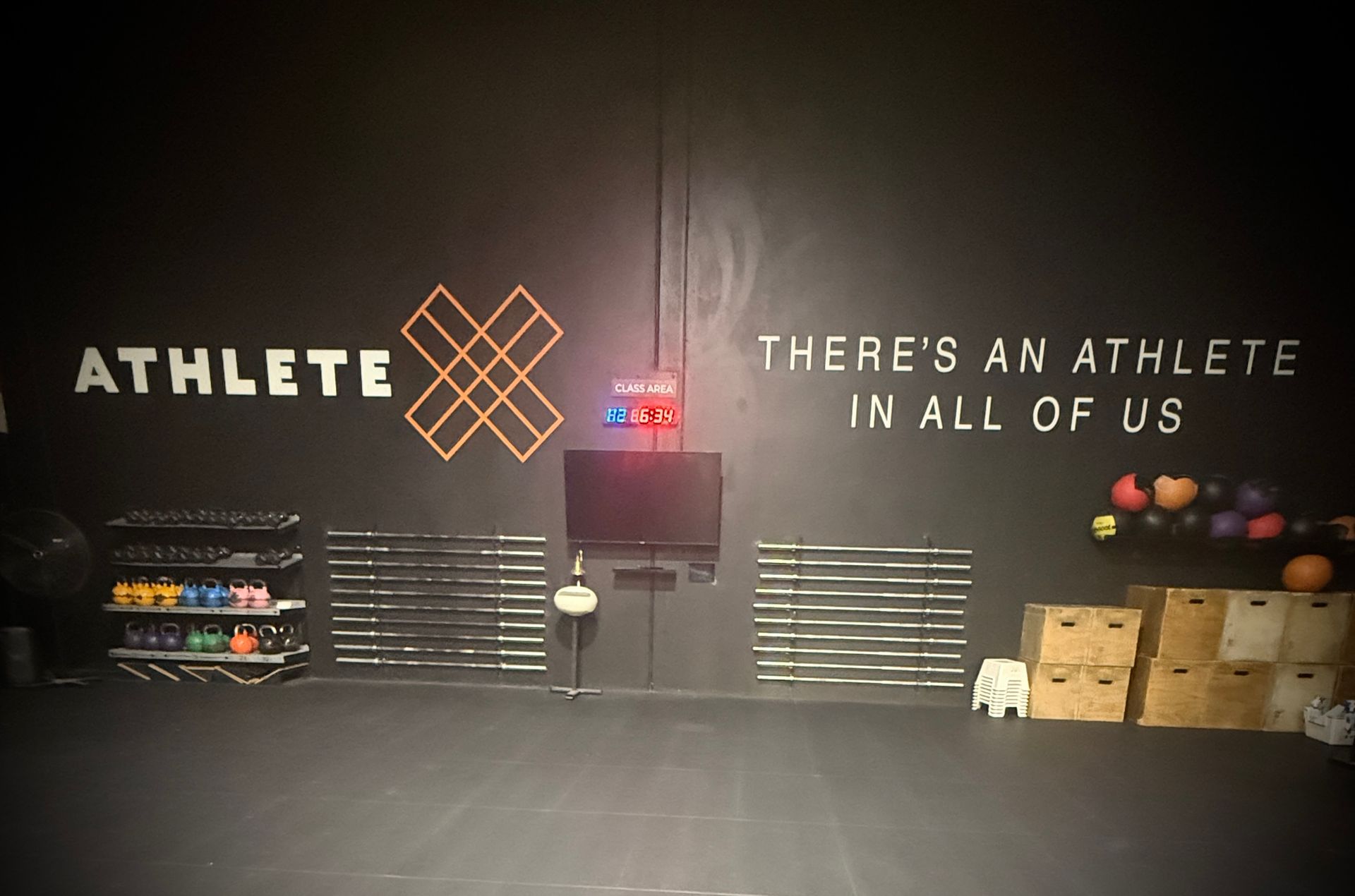
Beautiful people, Happy Wednesday. A quick one from me. I’m in Perth this week, spending time with my business coach (yes, my belief in coaching extends well beyond the gym) and catching up with a great mate who runs a world class facility called Athlete X. Athlete X is about as Virtus as a place can be without the blue turf and a V plastered on every wall. Mel and the team live and breathe growth, community and the idea of building lifelong athletes. I’ve admired them from afar for a long time, and it’s a privilege to spend time inside their community (even though I’m missing ours). One of their mantras resonates heavily ‘Don’t have to, get to.’ A simple shift in perspective, but it changes everything. How you show up for a session. How you change your kid’s nappy. How you pay your bills. How you move through your life. Perspective matters. We get to choose how we respond, whether the moment is good, challenging, or somewhere in between. Life gets pretty wonderful when we notice everything we already have, instead of focusing on what we don’t. As the immortal David Lynch says: focus on the donut, not the hole. Today, take a moment to think about something you might be dreading. Shift the mindset from ‘have to’ to ‘get to’ and see how your nervous system responds. Onwards. Wallace PS. If you’re not part of Virtus yet, or have been thinking about coming back, now’s a great time to jump in. Email me lachie@virtusperformance.com before the week’s out and I’ll line you up with something special to help you get the wheels turning.
By Lachlan Wallace October 16, 2025
At Virtus, we believe that looking after your mind is just as important as looking after your body. Whether you’re feeling stuck, overwhelmed, anxious, or simply want someone to talk to, getting support shouldn’t feel complicated. Watch this video of Nina walking you through the process! That’s where a Mental Health Care Plan (MHCP) comes in. What is a Mental Health Care Plan? A Mental Health Care Plan is something you and your GP create together to help identify any mental health concerns and outline a path forward. This often includes access to a psychologist, where you can receive Medicare rebates for up to 10 individual sessions per year, making professional support more affordable. Depending on your psychologist’s fees, there might be a small gap to pay, but the rebate significantly reduces the cost. How to Get a Mental Health Care Plan (Step by Step) 1. Book an appointment with your GP When you book, let the receptionist know you’d like to discuss your mental health. Some clinics will ask you to book a longer consultation so your GP has enough time to listen and complete the plan with you. 2. Work with your GP to create the plan During the appointment, your GP will talk with you about what’s been happening, how you’ve been feeling, and whether you’re eligible. If so, they’ll complete your Mental Health Care Plan, which gives you 6 initial sessions with a psychologist. 3. Choose your psychologist You can choose a psychologist that suits you, someone you feel comfortable talking to. Your GP can recommend options, or you can ask them to send your plan directly to the psychologist you’ve chosen. To receive the Medicare rebate, your plan must be dated on or before your first appointment. 4. Continue your care after your first 6 sessions Once you’ve completed your initial sessions, your psychologist will send a short progress report to your GP. You can then review your plan together and, if ongoing support is helpful, get a referral for up to 4 more sessions that year. Meet Nina: Here for Everyone Our psychologist Nina, brings warmth, understanding, and over a decade of experience helping people navigate life’s challenges. While Virtus is known for performance and training, Nina isn’t just for athletes . She helps people from all walks of life, including parents, students, professionals, couples, and anyone looking to improve their mental wellbeing. Her approach is compassionate and evidence-based, using tools like mindfulness, CBT, and EMDR to help you find clarity, calm, and confidence in yourself again. Take the First Step If you’ve been thinking about getting support but haven’t known where to start, booking that first GP appointment might be the most important step you take this year. Once you have your Mental Health Care Plan, you can book your first session with Nina here: 👉 Book with Nina Because you don’t have to do it alone, and you don’t have to wait until things get bad to start feeling better. Lachie
By Lachlan Wallace October 12, 2025
TL;DR: Training and stress create the stimulus for growth, but rest, recovery, and reflection—the negative space—are where adaptation happens. The goal is not endless effort, but finding the rhythm between work and rest that builds strength, resilience, and joy. Progress often feels like something that happens through action: the grind, the sets, the sweat. But the real growth occurs between those moments. In art, negative space gives depth and meaning to the image. In training and life, it’s recovery and regeneration. It isn’t the lifting or working that makes us stronger, but what follows after . The science of stress is captured in Hans Selye’s General Adaptation Syndrome. First comes the Alarm Stage, when the body recognises stress and reacts with a surge of cortisol, adrenaline, and inflammation. Next is the Resistance Stage , when adaptation happens. The body rebuilds stronger to handle future stress. Without recovery, we hit the Exhaustion Stage , where fatigue, injury, and burnout take hold. This is why negative space matters. The stimulus, the training and the effort, it is only half the process. Without time to recover and integrate, there is no adaptation. Sleep, sunlight, good food, stillness, and connection are not luxuries; they are essential. The body grows stronger after training, not during it. Your nervous system builds resilience when it feels safe, not when it’s overloaded. Recovery is not a break from work; it is where the work becomes valuable. At Virtus, we live by a belief system of growth. We are here to evolve, not to smash ourselves endlessly. Growth moves in cycles of stress, rest, and adaptation. We learn through challenge, but we change through restoration . The dance between effort and ease is where joy lives. The goal is rhythm, not constant acceleration. For me, this is the good stuff. Think of your life as the creation of art. The effort and training are your brushstrokes, but the negative space, the quiet, the stillness, the pause, gives it meaning. Without contrast, everything blurs. Without rest, progress fades. The more you value the quiet, the more your effort counts. At Virtus, we believe in playing the long game. We train hard, recover harder, and aim to be better every day, in and out of the gym. True strength is not how much you can do, but how well you can recover and return ready for more. Repeatability is about the best capacity you can have. Being able to show up, put in the work, then rest and return again the next day. Growth lives in the balance between push and pause, between sound and silence, between action and reflection. Between go and stop. If you’re ready to explore this rhythm for yourself, join us at Virtus. Our training is about progression, presence, and the simple joy of becoming better every day. Learning when to push, when to pause, and how to make the space between the reps work for you. Real growth happens in those quiet moments of recovery and regeneration. More isn't better. Better is better. Better every day. I'm here for it. Lachie
By Lachlan Wallace October 8, 2025
I was seeing Greg for treatment the other day, and like most sessions with him, I left with some brain food. This time though, the brain food was quite literal. We got talking about something called BDNF, Brain-Derived Neurotrophic Factor. Never heard of her? Me neither. But here we are. The Phys has this way of casually dropping knowledge bombs that make you rethink everything you thought you knew about performance and recovery. He’s part physio, part philosopher, part nerd who clearly spends too much time reading PubMed. He was explaining how BDNF works, and I found myself fascinated. The way he described it was simple: BDNF is like fertiliser for your brain. It helps your neurons grow, repair, and connect better, the same way a good strength program helps your muscles adapt. It’s the reason why exercise sharpens your mind, why learning new skills sticks faster, and why sleep and sunlight feel like magic for your body and soul. So yes, Greg is a nerd. A very smart, loveable nerd. What does BDNF actually do? Here’s the straightforward version that my little brain can understand... BDNF is a protein that lives in your brain and central nervous system. Its job is to help your brain grow and adapt. Every time you train, learn, move, rest, or eat well, you give your brain a dose of this stuff. It improves: Memory and learning Mood and motivation Recovery and resilience Long-term brain health It’s the reason people who train regularly tend to think clearer, feel better, and stay sharper as they age. It’s not just the exercise, it’s what the exercise does to the brain. Here’s the good news: you don’t need a lab coat or a neuroscience degree to boost your BDNF. You just need to live like a human was meant to live. Do these 6 things often... Move – Strength, conditioning, play, walk. The more you move, the more your brain adapts. Sleep – Seven to nine hours is your brain’s growth window. Don’t skip it. Eat real food – Omega-3s, colourful veggies, berries, and good fats all feed your brain. Get sunlight – 15–30 minutes outside each day does wonders for mood and BDNF. Learn new things – A new skill, language, sport, or even a random hobby keeps your neurons firing. Connect – Deep conversations, laughter, and gratitude all improve brain health (and make life better). At Virtus, we talk a lot about being Better Every Day. That’s not just a feel-good motto, it’s a biological reality. Every rep, every breath, every night of decent sleep literally changes your brain. BDNF is proof that the habits you build don’t just make you stronger, they make you smarter, calmer, and more adaptable. So next time Greg is elbow-deep in your hamstring talking about brain fertiliser, remember: the real lesson might not be about your muscles. It might be about growing your mind. And maybe thank the Phys for being a beautiful nerd who keeps us all feeling better, and fixed , body and brain. Keep being wonderful Lachie
By Lachlan Wallace October 8, 2025
The quiet voice that talks you through a session, a meeting, or a moment of doubt. Sometimes it pushes. Sometimes it criticises. Either way, it shapes how you perform. How you progress. How you stagnate And science says it also shapes how your brain works. A 2021 study by Kim and colleagues (PMID: 34290300) found that self-talk, whether positive or negative, changes how brain networks communicate . Positive self-talk strengthens the connections between areas that drive motivation, focus, and self-control. Negative self-talk weakens them. In short, the words you say to yourself can rewire your brain. So stop being a di** to yourself. Positive self-talk isn’t about empty optimism. It’s about respect. It's about building a belief system. It’s a reminder that belief, focus, and self-awareness grow first from the way we speak to ourselves. Then from what we do. The study showed that people who used self-respect phrases didn’t just feel better, they performed better too. Criticism might still drive you for a while, but it’s like running on fumes. It creates tension instead of flow, stress instead of focus. Over time, that pattern wears you down and becomes an impediment to growth. Treat your inner voice like your best friend. Like your grandma. Like the 8 year old version of you. Be kind. Challenge it, don’t let it tear you apart. Next time you’re struggling in a session, or at work, or doubting yourself, step back (metaphorically) and listen to your own commentary. Is it helping you or holding you back? Serving you, or sabotaging? Your brain doesn’t know the difference between real and rehearsed, it believes what you repeat. So speak to yourself like someone you love and care for. Because your brain is listening & it's taking notes. Food for thought. #clever Lachie