Simplify Your Nutrition: Fuelling High Performance for Busy Lives

Lachlan Wallace • September 8, 2025

For athletes and everyday humans!

TLDR: Focus on balanced meals, portion control, and hydration to support energy and recovery without stress or confusion.

In the whirlwind of a busy life, nutrition often falls by the wayside. But eating well doesn?t have to be complicated?it?s about making consistent, balanced choices that fuel you for whatever the day brings. At Virtus, we believe nutrition should be simple, enjoyable, and sustainable. Here?s how to make nutrition work for you, no matter how packed your schedule is.

1. The Building Blocks: Macros & Micros

A balanced approach starts with the basics: macronutrients and micronutrients.

  • Proteins for muscle repair, growth, and recovery. Think lean meats, tofu, beans, and fish.
  • Carbohydrates for energy, focusing on complex sources like oats, brown rice, and sweet potatoes.
  • Fats for brain health and sustained energy. Go for avocados, olive oil, and nuts.

Micronutrients?like iron, calcium, and vitamin D?are essential for health and performance, supporting everything from bone strength to immune function. These come from whole foods like fruits, vegetables, and lean proteins. When we focus on variety, we?re nourishing both body and mind.

2. Simplifying Food Choices for Busy Days

Nutrition doesn?t need to be overwhelming. Here are some quick categories to focus on, making it easy to choose nutrient-dense foods:

  • High-Protein Snacks: Greek yogurt, boiled eggs, cottage cheese, or edamame.
  • Good Fat Sources: Avocados, nuts, seeds, and fatty fish like salmon.
  • Quality Carbohydrates: Brown rice, quinoa, whole oats, and legumes.
  • Fibre Sources: Leafy greens, oats, apples, and berries.
  • Superfoods: Foods with a nutritional boost, such as blueberries, turmeric, and dark chocolate.

These categories are quick to remember and make decision-making easier, even on busy days. The goal is to find options you enjoy and can prepare with minimal hassle.

3. Timing Your Nutrition for Performance

Proper meal timing supports energy and recovery:

  • Pre-Workout : Eating a balanced meal 1-2 hours before training, focusing on carbs and a bit of protein, can fuel your performance.
  • Post-Workout : Protein after training helps muscles repair. Aim to eat within 30 minutes post-session to make the most of recovery.

This timing helps sustain energy and ensures that your efforts in training pay off fully.

4. Hydration: Essential for Health and Performance

Hydration is foundational, impacting everything from cognitive function to physical performance. Aim for 3-4 litres of water a day, adjusting for hotter days or intense training. Adding electrolytes can support hydration, especially after prolonged exercise or in hot conditions.

5. Portion Control Without Stress

Mindful portion control supports balanced energy without strict calorie counting. A simple guide is:

  • Protein : Palm-sized portion
  • Carbs : Fist-sized portion
  • Fats : Thumb-sized portion

This approach ensures you?re getting enough nutrients without the need for scales or complex tracking. It?s about eating with awareness, enjoying food, and listening to hunger cues.

6. Gut Health and Recovery Foods

Our gut health impacts energy levels, immunity, and even mood. Including foods like yogurt, kimchi, and fibre-rich options supports digestion and nutrient absorption. Foods that aid recovery, like tart cherry juice for inflammation or pineapple for digestion, can also help you bounce back faster from tough workouts.

7. Quick, Nutritious Meal Ideas

Here are some easy, balanced meals that take minimal time to prepare:

  • Grilled Chicken with Quinoa & Vegetables: Lean protein with a side of complex carbs and steamed veggies.
  • Salmon with Sweet Potatoes & Broccoli: Omega-3-rich salmon paired with fibre and vitamins.
  • Vegetable Stir-fry with Tofu & Brown Rice: Quick, versatile, and packed with nutrients.
  • Smoothie with Greek Yogurt, Berries, & Chia Seeds: Perfect for breakfast or post-workout.

These meals combine protein, carbs, and fats, keeping you fuelled and satisfied without excessive prep.

8. Practical Tips for Sustainable Nutrition

  • Plan Ahead : Dedicate a few minutes each week to meal planning, even if it?s just deciding on a few go-to meals.
  • Batch Cook : Prepare grains, proteins, or roasted veggies in bulk to save time.
  • Stay Consistent : Aim for progress over perfection. An occasional treat won?t derail your progress.
  • Listen to Your Body : Notice how different foods make you feel and adjust accordingly. Good nutrition supports energy, recovery, and overall well-being.

Nutrition Is a Lifestyle, Not a Quick Fix

True nutrition success is about habits you enjoy and can maintain. Simplifying your choices, prioritising whole foods, and listening to your body creates a positive relationship with food that supports long-term health and performance. Rather than aiming for perfection, focus on creating balance, choosing foods you love, and building habits that nourish you.

Nutrition is about making choices that support your lifestyle. Enjoy your food, trust in your consistency, and remember that every small step is progress toward a healthier, stronger you.

For more guidance on maintaining a balanced approach to nutrition, join our Virtus Community Facebook Group where we share free resources, meal ideas, and strategies for long-term health and performance.


Be Amazing,
Coach Lachie

P.S. If you?re ready to take your Health, Fitness, or Performance to the next level and work with Virtus, you can learn more about us here or book a Free Intro Session via our Website

www.wordpress-1266437-4585655.cloudwaysapps.com  

Recent Blog Posts
By Jacqui Coughlan March 15, 2026
For a long time, I was waiting for a moment. A ball to drop. A big, grand change. An exciting "before and after" transformation. Time and time again, I felt frustrated…there was no perfect routine and the goal posts kept moving at a pace that made me feel like I couldn't sit long enough to make the "big transformation" happen. Then one day something shifted, but not in the way I expected. I was reflecting on a difficult conversation I had to have at work and noticed something small but significant…the way I responded was different to how I would have responded 12 months ago. I wasn't reactive, I didn't take things personally. Instead, I looked for a solution to the problem. I felt proud. Proud that I had the capacity to respond calmly. Proud that I could step back from my emotion and focus on what actually mattered in that moment. Somewhere along the way…I had changed. That reflection led me to think about the way I have viewed my training and body. Coming from a health and sport background, I always battled with the logical arguments. "Size doesn't matter." "Training isn't just about aesthetics." "How sad would it be looking back on my younger years knowing I spent so much time hating how I looked." Logically I understood all of this, but knowing something and feeling it are very different things, which constantly left me conflicted. For a long time, I told myself that when things finally settled down, when study was over, when work slowed down, that would be the moment I would "lock in". But little did I know, day by day, I was already changing. I changed my environment, and with that came a shift in how I viewed training. It was no longer a chore or something I tired to how I should look. It became something I genuinely enjoyed doing again, which I hadn't even realised I lost. With all this positive change, in the back of my mind, I still believed my big transformation was yet to come. What I didn't realise was that I was already in the middle of it… Because transformation, as it turns out, rarely looks like an 8-week challenge. It's not a short course, or a dramatic reveal. It's showing up again and again, especially when you fall off. It's doing the things you genuinely love and surrounding yourself with people who inspire you to be better. It's being willing to walk into rooms where you're not the best person there and leaving your ego at the door long enough to realise how much you still have to learn. Maybe it's just life experience, but slowly, day by day, conversation by conversation, experience by experience, I started to see the shift in myself that I had once placed on a pedestal, believing it would arrive suddenly. I used to think success meant the perfect morning routine. The perfect diet. Training as hard as possible every session. Handling every hard conversation with perfect articulation. That was the standard I measured myself against…but now I see something different. Overtime, I simply got better. Not perfect. Never perfect. But a little better. And when I look back on the past 12 months, as a person and a professional, I can say with absolute certainty I have transformed. Just not in the way I expected. It didn't come with confetti or likes on Instagram. It came through hard conversations. Through challenging my own beliefs. Through putting myself in discomfort and surrounding myself with people who made me want to grow. So when did we end up here? Not through a quick fix. Not through a grand moment. Just months and years of showing up with the promise to try be a little better than the day before. A promise to myself that growth will forever be at the very core of my being and how I choose to move through the world. Jac.
By Lachlan Wallace March 5, 2026
At Virtus we talk a lot about getting better every day. (it's on the wall so it must be important) But improvement doesn’t come from doing the same things and thinking the same thoughts over and over again. It comes from being willing to challenge the story you currently believe about yourself, your training, and the world around you. Most people look for information that proves they’re already right. We search for things that confirm what we believe.
We ignore the things that challenge it. That’s human nature. That's why your social media feed is built for you, based on what you search and watch. But it’s also one of the biggest barriers to becoming the best version of yourself. High performers do the opposite. They deliberately seek out ideas, perspectives and feedback that challenge their assumptions. Not because they enjoy being wrong. But because they understand something important: Growth lives on the other side of discomfort. When you expose your beliefs to scrutiny a few things happen: * You uncover blind spots * You identify weak assumptions * You see alternative paths * You reduce the chance of making poor decisions * You expand what you thought was possible Sometimes this process will show you that your current thinking isn’t serving you. Other times you’ll come out the other side with even greater conviction that you’re on the right path. Either way, you win. Because your beliefs have now been tested, not just assumed. And things that survive honest scrutiny tend to be far stronger. At Virtus we believe that agency and personal responsibility sit at the centre of high performance. You are responsible for your actions, your standards, and the way you respond to the world around you. Part of that responsibility is being willing to question your own thinking. To ask: * What if I’m wrong? * What am I not seeing? * What would someone who disagrees with me say? * Is there a better way? These questions aren’t signs of weakness. They’re signs of someone committed to growth . The athletes, coaches and humans who continue to evolve are the ones who stay curious. They seek feedback. They welcome challenge. They refine their beliefs as they learn. Because every time you challenge a limiting belief, you expand your current capacity. And expanded capacity is what allows you to: * Perform at a higher level * Handle more responsibility * Solve bigger problems * Become a better teammate, parent, partner and leader That’s the real goal. Not being right. But becoming better. So if you want to grow, here’s a simple rule: Actively seek information that challenges you. If your thinking survives that test, your conviction will be stronger. If it doesn’t, you’ve just found the next step in your evolution. Either way you move forward. That’s the game. Just don’t forget to have fun doing it. For me, this is what makes this space & community special Better every day. 💙 Lachie
By Lachlan Wallace December 17, 2025
Most of you will know Jacqui Coughlan. She's our head coach here at Virtus and one of the more capable humans you'll ever meet. She also has outrageously high standards in pretty much every aspect of her life, a standard that she does her best to hold herself to, but by design is almost unreachable. This is one of her superpowers, but it can also be an impediment for progress, growth and self belief systems when she feels she may be continually falling short of unrealistic expectations. After a chat last week, I challenged Jac to a simple task. Write 1 page per day in a physical journal, to help build awareness and context for where you're at and what you need right now. Regardless of whether she filled a page every day or not, how she thought/felt/behaved would shine a light on exactly where the value might lie. Anyone who knows me would know that I have long been a strong proponent of journaling. I've written many blogs on the topic, but here's a simple one for some context . Being such a high functioning individual, Jac (and many of us) tend to fall into the all or nothing approach...'well if I don't do it perfectly there's no point doing it' which is an incredibly human perspective to take. This perspective also gives us an out, because you can choose to do the nothing. But here's the secret, quite often the cave you fear to enter holds the treasure you seek. When you face the resistance that bubbles to the surface, give yourself permission to fail and do the thing, magic starts to happen. Do it often enough and the person staring back to you on day 30 or 50 or 100 is a more capable, more aware, more authentic version of you. Anyway, back to the point. We are a week on from that conversation, Jac hasn't ticked off 7 days of journaling, however, she took a massive step forward on Monday and she finished a page. Her reflections were simple "I journaled. It was a slay" . I won't put words in her mouth, but in summary, game changer. So here's my challenge to you, and a tool to help you execute it. Take 5 minutes out of your day to write some shit down. It can be in a physical journal or online. The tool that I'd suggest you use if you do it online is The Most Dangerous Writing Prompt Generator - It’s a high-pressure writing tool that deletes your work if you stop typing for too long usually around 5 seconds. It’s designed to help you overcome perfectionism, self-doubt, and writer’s block by forcing you to keep writing without hesitation. I used it this morning, it actually gave me the idea to write this blog. Give it a crack, here's what I wrote in 5 minutes this morning... Be amazing. Lachie This is a pretty cool concept, it's super easy to get stuck in your head and not actually be able to exhale and write something down, the inner voice screaming about the quality of the content, when in reality the juice comes from the squeeze of the doing. So here's five minutes of my thoughts, imperfect, yet valuable in it's own way. As Ferris once said 'Life moves pretty fast, best you stop and look around once in a while'... Did I butcher that quote? Absolutely, but every first draft is shit, so here we are. Let's take that quote a little further, 'your thoughts move pretty fast, best you step back and examine them once in a while' When we have the awareness / capacity to zoom out and actually observe the flow of cognisnace (is tnat how you spell it?) rushing through our mind, we gain a superpower. That observation gives us space, to continue to let our stream of consciousness drag us down the river, OR, to slow down, assess, be proactive with our response rather than reactive. Which in itself has the capacity to change, enhance, enrich our existence, or at least our perspective on our existence. From there, we can make better choices, reflect on our emotions, cultivate a level of awareness simply not available to us if we spend our whole lives swimming in the river. Fighting with or going with the stream of consciousness. What an empowering realisation, you are not your thoughts, you are an observer of them, and when you shift your perspective you now have the ability to choose your response, to do the thing, or to let the thought simply float away before it does any harm. This was fun. Onwards.
By Lachlan Wallace December 4, 2025
Here’s the truth most gyms and coaches miss. You can’t build a high performing athlete o top of a stressed, overwhelmed, burnt out human. You can try. You might even get a few good weeks out of them. But it won’t last. It never does and longevity is the game. Here’s something worth remembering. Everyone is an athlete in their own way. Every single person who walks through our doors is juggling physical, mental, emotional and social loads. Training is just one part of a much bigger picture. At Virtus, we start with that bigger picture. We start with the person. We meet you where your at. We talk about your world. Your responsibilities. Your sleep. Your headspace. Your joys and their messiness. Because when you understand the human, the training becomes clearer. When you support the human, the athlete feels safe enough to come out and play. Most people walk around thinking their training problem is a training problem. It rarely is. It’s usually a human problem. Too much noise, not enough support. Too many expectations, not enough grounding. Too many friction, not enough awareness. So we flip it. We meet the person first. We listen. We connect. We build trust. Then we train with purpose instead of pressure. This thing we get to do is a privilege. This shift is when people start doing things they never believed they could. That’s when longevity gets built. That’s when training becomes a part of a life well lived. It's outrageously simple, we begin to take care of themselves when we feel seen and understand intimately what we need most. For Virty Members, this time of the year can be chaotic, this is why it is the perfect time to align on what matters most. Book a goal review. Or if you want a deeper dive, book a private session or a Nutrition and Lifestyle chat with one of our coaches. Give yourself the space to focus on the human first, so we can help the athlete (whatever your sport looks like) thrive. If you're not currently frequenting Virtus, and you want to train somewhere that actually cares about the person in front of them, book your intro or jump on a call with me (o401850474) We’ll start with you, not just your goals. 5 questions we use to help this process.... - What do you need that you don't have right now? - What does winning look like? - What do we need to be good or better at? - What do we need to do? - How will we know.... Big love. Lachie With self awareness comes great potential.
By Lachlan Wallace November 26, 2025
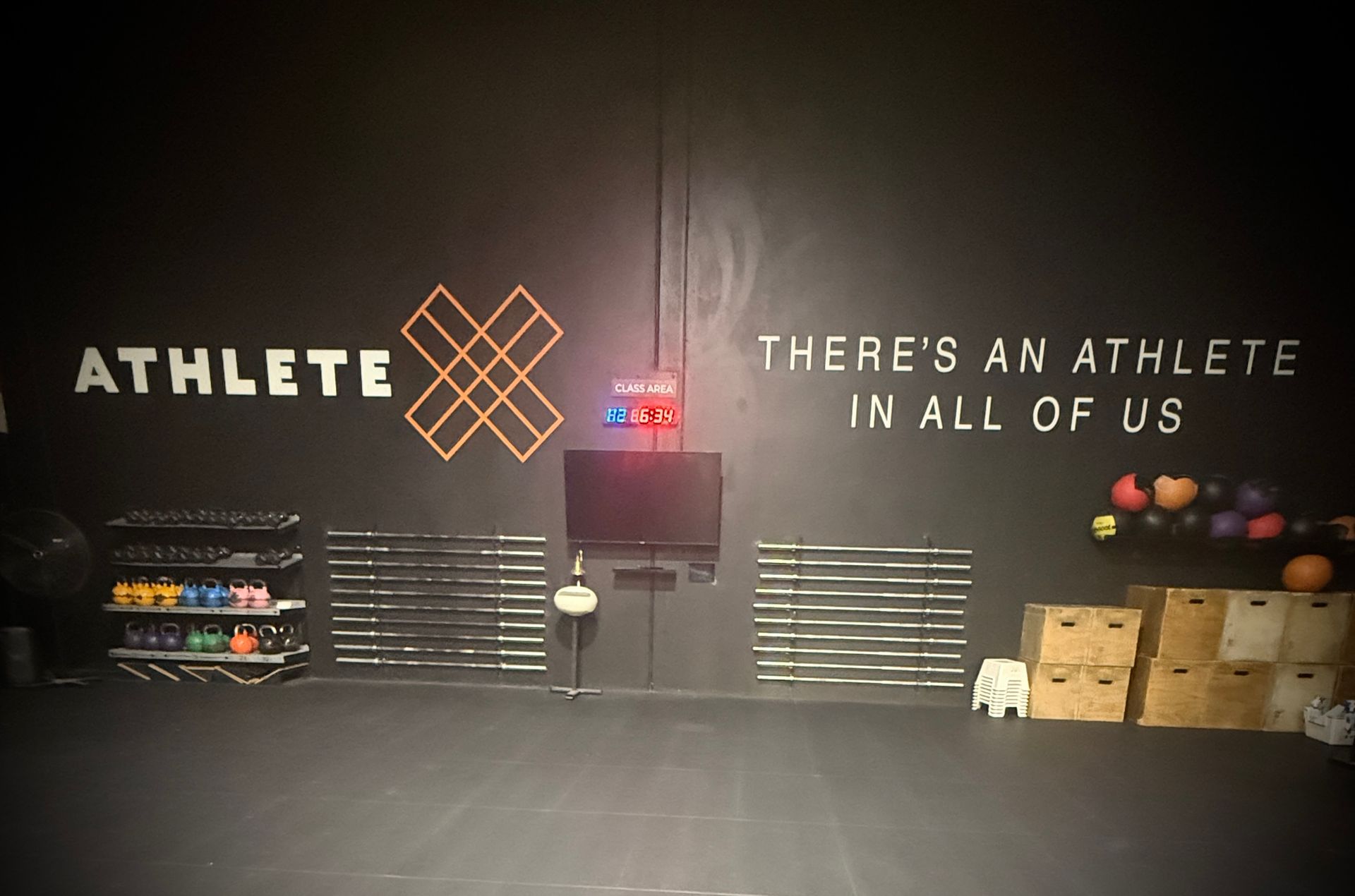
Beautiful people, Happy Wednesday. A quick one from me. I’m in Perth this week, spending time with my business coach (yes, my belief in coaching extends well beyond the gym) and catching up with a great mate who runs a world class facility called Athlete X. Athlete X is about as Virtus as a place can be without the blue turf and a V plastered on every wall. Mel and the team live and breathe growth, community and the idea of building lifelong athletes. I’ve admired them from afar for a long time, and it’s a privilege to spend time inside their community (even though I’m missing ours). One of their mantras resonates heavily ‘Don’t have to, get to.’ A simple shift in perspective, but it changes everything. How you show up for a session. How you change your kid’s nappy. How you pay your bills. How you move through your life. Perspective matters. We get to choose how we respond, whether the moment is good, challenging, or somewhere in between. Life gets pretty wonderful when we notice everything we already have, instead of focusing on what we don’t. As the immortal David Lynch says: focus on the donut, not the hole. Today, take a moment to think about something you might be dreading. Shift the mindset from ‘have to’ to ‘get to’ and see how your nervous system responds. Onwards. Wallace PS. If you’re not part of Virtus yet, or have been thinking about coming back, now’s a great time to jump in. Email me lachie@virtusperformance.com before the week’s out and I’ll line you up with something special to help you get the wheels turning.
By Lachlan Wallace October 16, 2025
At Virtus, we believe that looking after your mind is just as important as looking after your body. Whether you’re feeling stuck, overwhelmed, anxious, or simply want someone to talk to, getting support shouldn’t feel complicated. Watch this video of Nina walking you through the process! That’s where a Mental Health Care Plan (MHCP) comes in. What is a Mental Health Care Plan? A Mental Health Care Plan is something you and your GP create together to help identify any mental health concerns and outline a path forward. This often includes access to a psychologist, where you can receive Medicare rebates for up to 10 individual sessions per year, making professional support more affordable. Depending on your psychologist’s fees, there might be a small gap to pay, but the rebate significantly reduces the cost. How to Get a Mental Health Care Plan (Step by Step) 1. Book an appointment with your GP When you book, let the receptionist know you’d like to discuss your mental health. Some clinics will ask you to book a longer consultation so your GP has enough time to listen and complete the plan with you. 2. Work with your GP to create the plan During the appointment, your GP will talk with you about what’s been happening, how you’ve been feeling, and whether you’re eligible. If so, they’ll complete your Mental Health Care Plan, which gives you 6 initial sessions with a psychologist. 3. Choose your psychologist You can choose a psychologist that suits you, someone you feel comfortable talking to. Your GP can recommend options, or you can ask them to send your plan directly to the psychologist you’ve chosen. To receive the Medicare rebate, your plan must be dated on or before your first appointment. 4. Continue your care after your first 6 sessions Once you’ve completed your initial sessions, your psychologist will send a short progress report to your GP. You can then review your plan together and, if ongoing support is helpful, get a referral for up to 4 more sessions that year. Meet Nina: Here for Everyone Our psychologist Nina, brings warmth, understanding, and over a decade of experience helping people navigate life’s challenges. While Virtus is known for performance and training, Nina isn’t just for athletes . She helps people from all walks of life, including parents, students, professionals, couples, and anyone looking to improve their mental wellbeing. Her approach is compassionate and evidence-based, using tools like mindfulness, CBT, and EMDR to help you find clarity, calm, and confidence in yourself again. Take the First Step If you’ve been thinking about getting support but haven’t known where to start, booking that first GP appointment might be the most important step you take this year. Once you have your Mental Health Care Plan, you can book your first session with Nina here: 👉 Book with Nina Because you don’t have to do it alone, and you don’t have to wait until things get bad to start feeling better. Lachie